Discover Kottayam
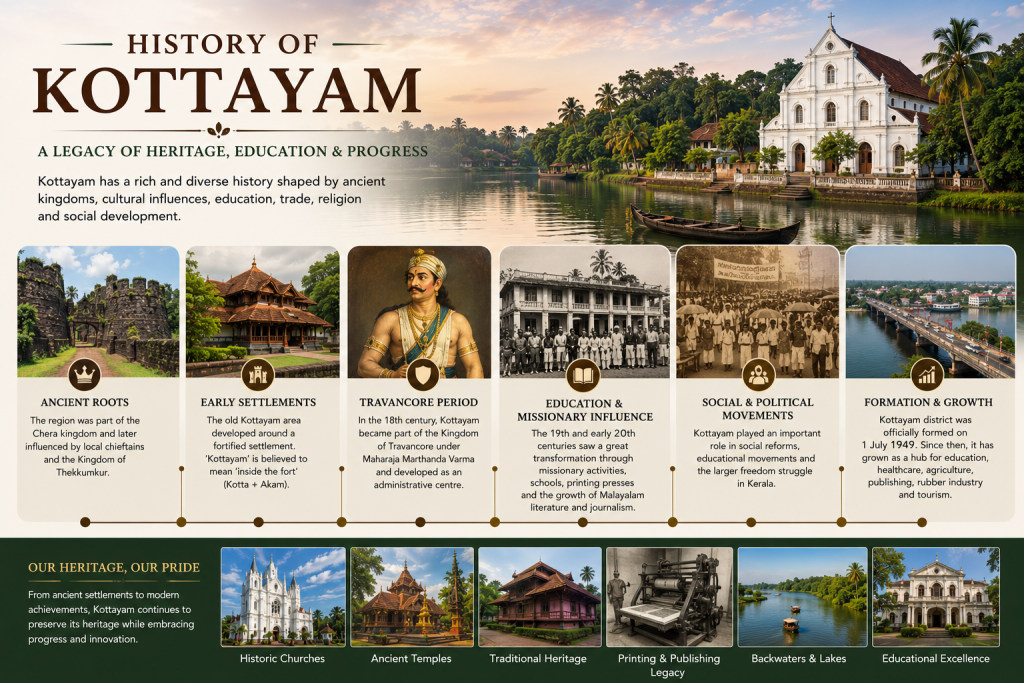
Kottayam is a beautiful district in Kerala, known for its lush green landscapes, serene backwaters, rich cultural heritage, and strong educational traditions. Often called the “Land of Letters, Latex and Lakes,” Kottayam blends natural beauty with a vibrant community and progressive development. From scenic villages and historic landmarks to rubber plantations and peaceful waterways, the district offers a unique blend of tradition, nature, and modern living.
District Overview
Kottayam is one of Kerala’s most culturally rich and naturally beautiful districts, surrounded by green hills, rivers, lakes, and peaceful countryside. The district is widely recognized for its contribution to education, literature, publishing, rubber cultivation, and social development.
Kottayam’s landscape features the beautiful Vembanad Lake, Kumarakom backwaters, rubber plantations, waterfalls, temples, churches, and historic landmarks. Its diverse communities and long-standing traditions contribute to a vibrant cultural identity.
The district also serves as an important center for education, healthcare, agriculture, tourism, and commerce. With its combination of natural beauty, heritage, and modern development, Kottayam continues to be an attractive place to live, visit, learn, and do business.
Kottayam Through the Years
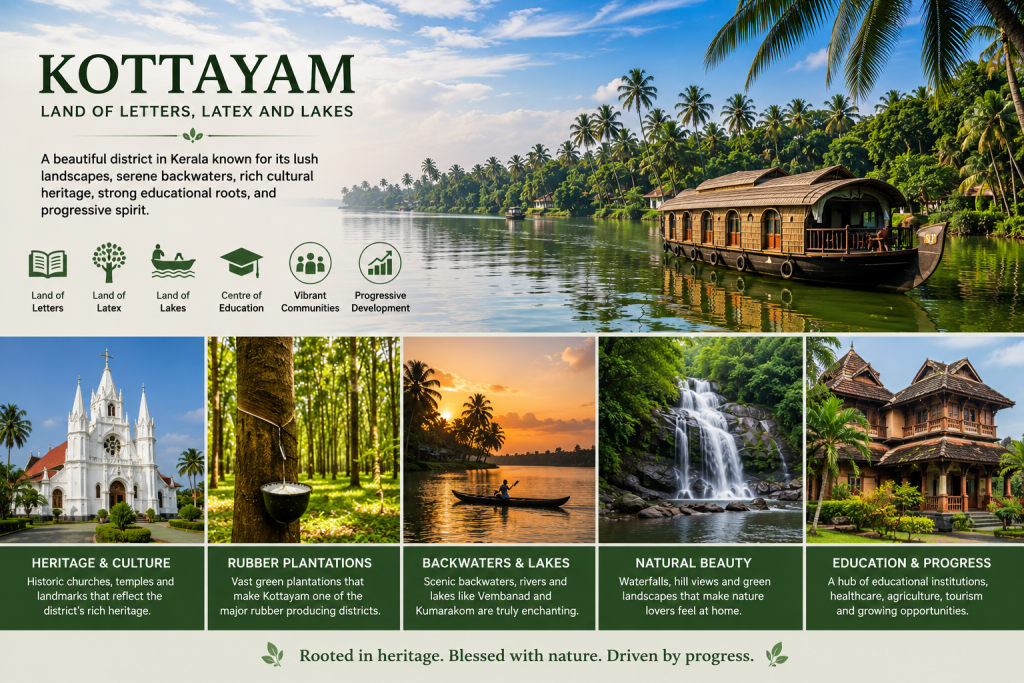
Kottayam has a long and fascinating history rooted in ancient kingdoms, trade, religion, education, and culture. The region was historically associated with the Chera kingdom and later came under the influence of local rulers and the Kingdom of Thekkumkur. The old Kottayam area developed around a fortified settlement, which is believed to be connected to the origin of its name.
Kottayam gained special importance during the 19th and early 20th centuries through the growth of education, printing, publishing, and Malayalam literature. Christian missionary activities contributed significantly to the development of schools and printing institutions. The district is also remembered for its role in Kerala’s social and political movements.
Kottayam district was officially formed on 1 July 1949, following the reorganization of the erstwhile Travancore-Cochin state. Since then, it has developed into an important center for education, healthcare, publishing, agriculture, rubber cultivation, and tourism, while continuing to preserve its rich historical and cultural heritage.
Major Cities & Towns of Kottayam
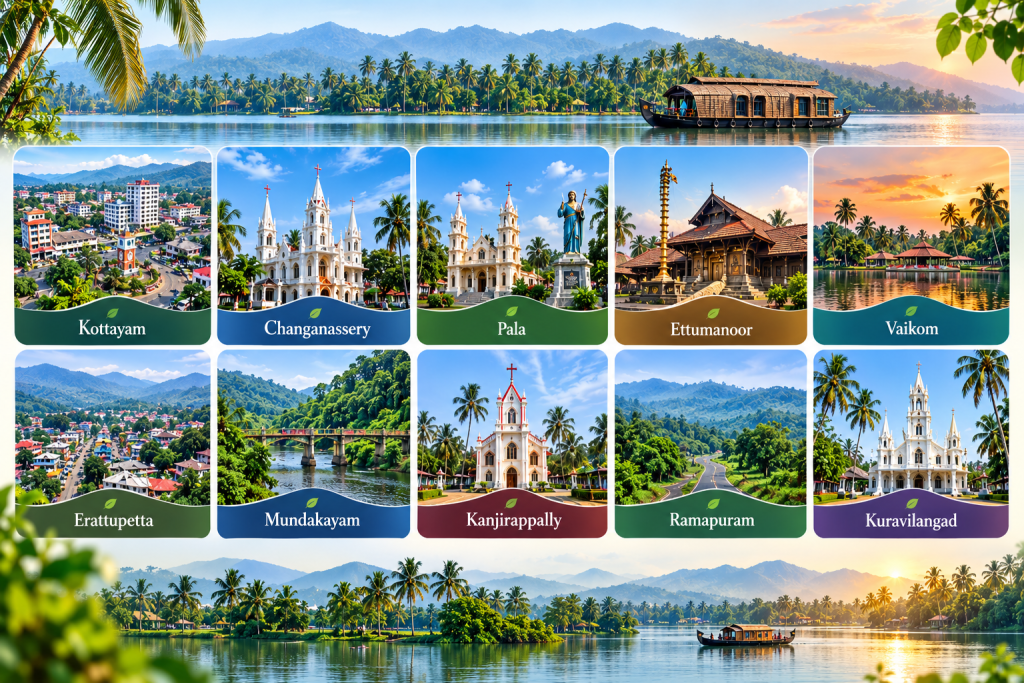
Kottayam district is home to several important cities and towns that contribute significantly to the region’s economy, education, healthcare, trade, agriculture, and tourism. Kottayam, the district headquarters, is a major centre for education, publishing, healthcare, and commerce. Changanassery is known for its cultural heritage and commercial importance, while Pala is a prominent educational and business hub surrounded by rubber plantations. Ettumanoor is famous for its historic temple and serves as an important transportation centre. Vaikom is renowned for its religious heritage and scenic backwater surroundings. Other notable towns such as Kanjirappally, Erattupetta, Mundakayam, Kuravilangad, and Ramapuram serve as important centres for agriculture, plantation activities, local trade, education, and community development.
Population & District Statistics
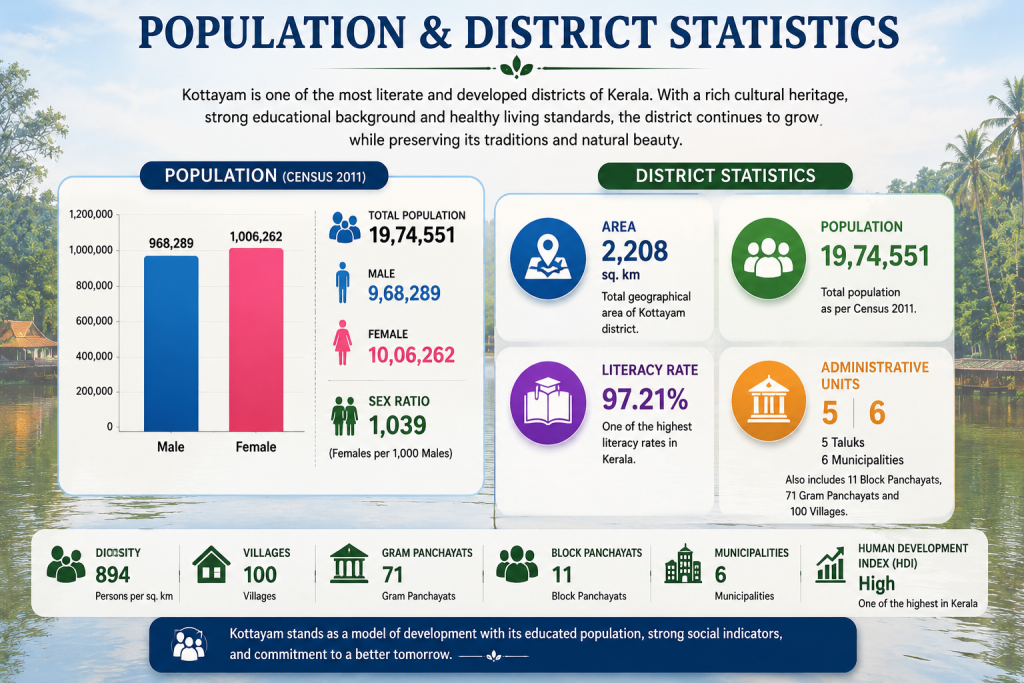
Kottayam is a well-developed district in Kerala with a population of 19,74,551 according to the 2011 Census. The district covers an area of approximately 2,208 sq. km and is known for its high literacy rate of 97.21%. Kottayam has a balanced mix of urban and rural communities, supported by strong educational, healthcare, agricultural, and commercial sectors. The district is administratively divided into 5 taluks and 6 municipalities, along with several block and gram panchayats. These statistics highlight Kottayam’s strong social development, educational achievements, and growing economic importance.
Geographical Measurements of Kottayam
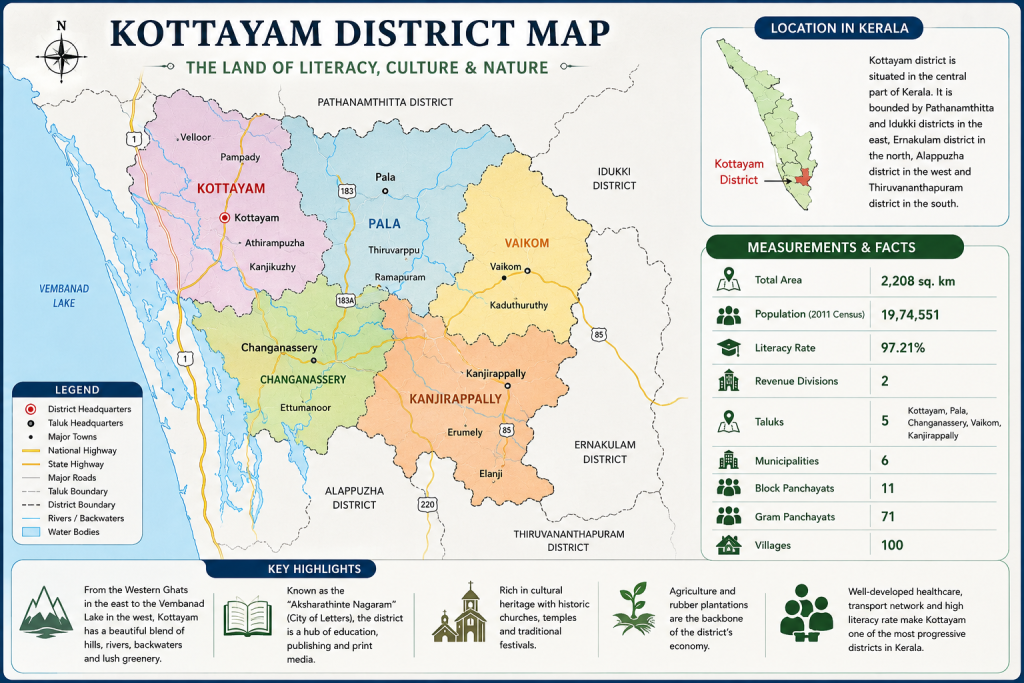
Kottayam district covers an area of 2,208 sq. km and has a diverse geographical landscape consisting of highland, midland, and lowland regions. The district stretches from the Western Ghats in the east to the Vembanad Lake and Kuttanad region in the west. Its landscape includes hills, valleys, rivers, backwaters, paddy fields, and extensive rubber plantations. Kottayam has 5 taluks and 100 villages, with 2 revenue divisions, 6 municipalities, 11 block panchayats, and 71 gram panchayats.Kottayam’s geographical setting plays an important role in its climate, agriculture, tourism, and settlement patterns. The eastern highlands are characterized by hills and forests, while the central and western regions feature fertile plains, rivers, lakes, and backwaters.
Economy & Revenue of Kottayam
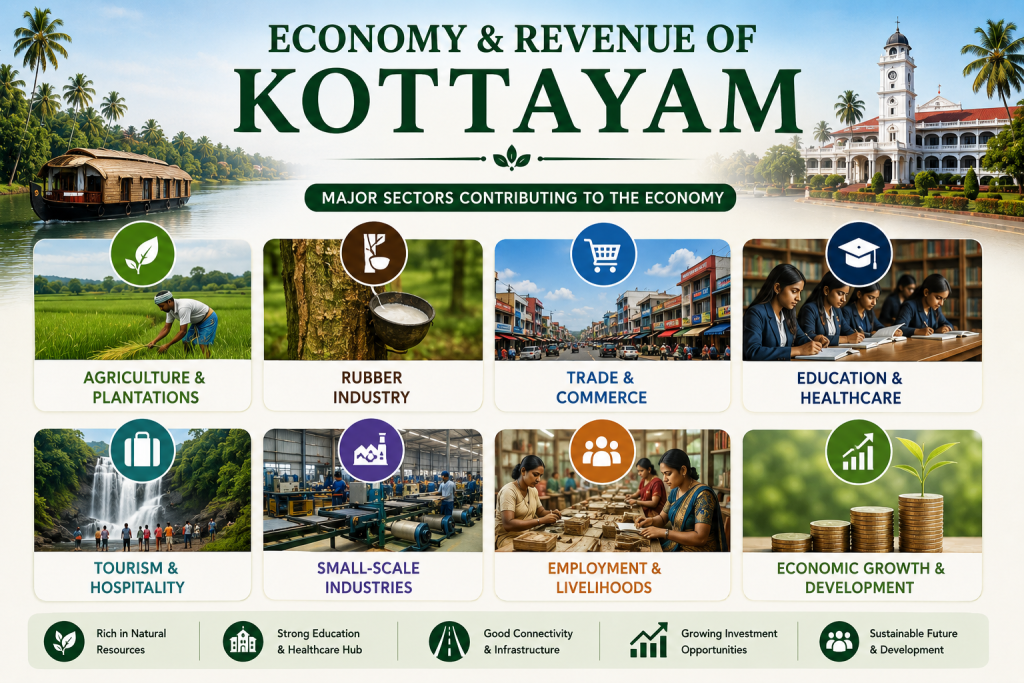
Kottayam has a diverse and steadily developing economy supported by rubber cultivation, agriculture, trade, tourism, healthcare, education, and small-scale industries. The district is one of Kerala’s important rubber-producing regions, while its educational institutions, healthcare services, commercial centers, and tourism sector contribute significantly to local economic activity. Agriculture and plantation-based activities provide livelihoods for many communities, while growing businesses and service sectors continue to strengthen the district’s economic base. The district’s strong transport connectivity also supports the movement of goods and services. Local markets and commercial centers play an important role in regional trade. With continued investment in tourism, infrastructure, agriculture, and modern services, Kottayam has strong potential for sustainable economic growth.
Weather & Climate
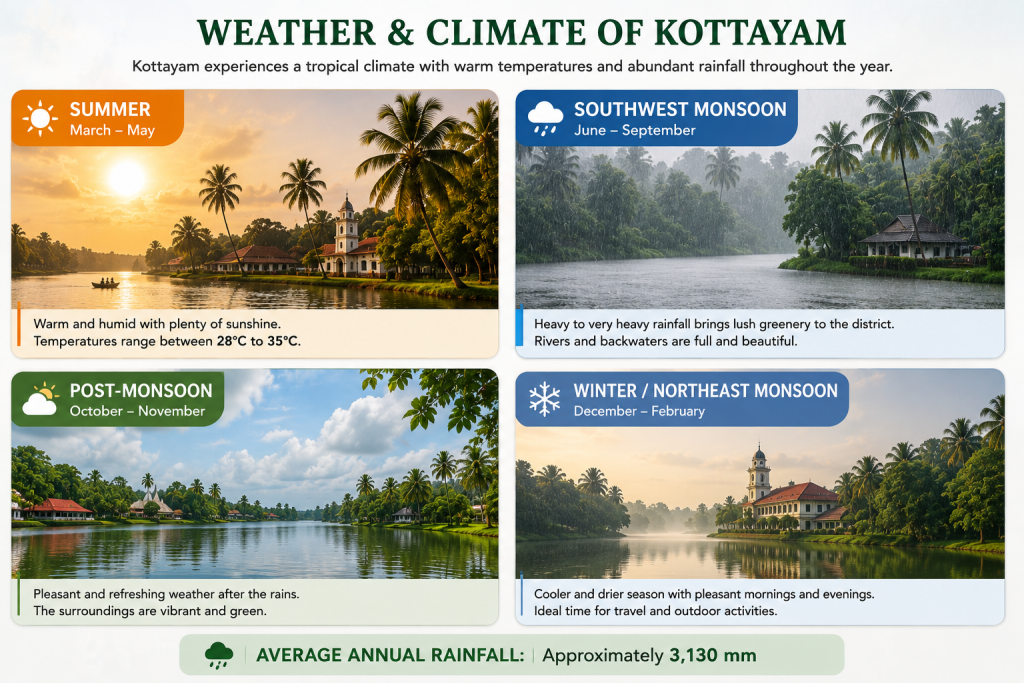
Kottayam experiences a tropical climate with warm temperatures and abundant rainfall throughout the year. The hot season generally lasts from March to May, followed by the Southwest Monsoon from June to September, which brings substantial rainfall. October and November experience the post-monsoon season, while December to February is comparatively cooler and drier. Kottayam receives an average annual rainfall of around 3,130 mm, making the district lush and green for much of the year.Kottayam’s climate is strongly influenced by its proximity to the Western Ghats and the Arabian Sea, which contributes to its humid conditions and seasonal rainfall. The pleasant greenery, rivers, backwaters, and plantations are closely connected to the district’s abundant precipitation.